Inhalation Systems - Hidrea

System for inhalation therapies

Modello IMT19

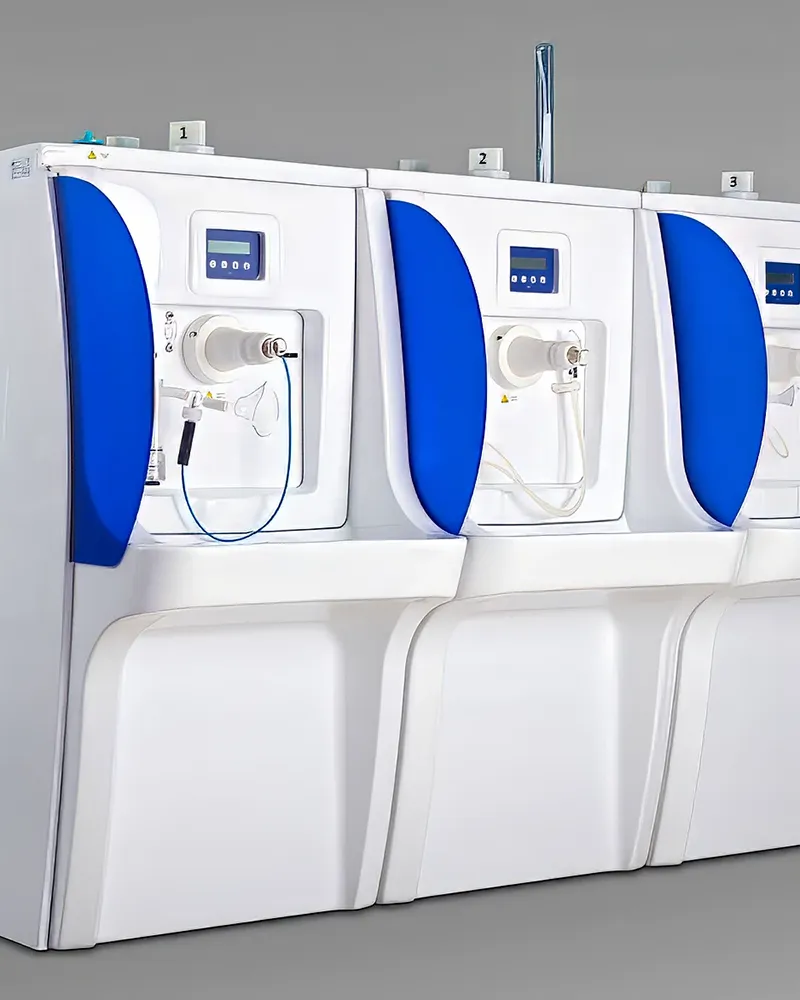
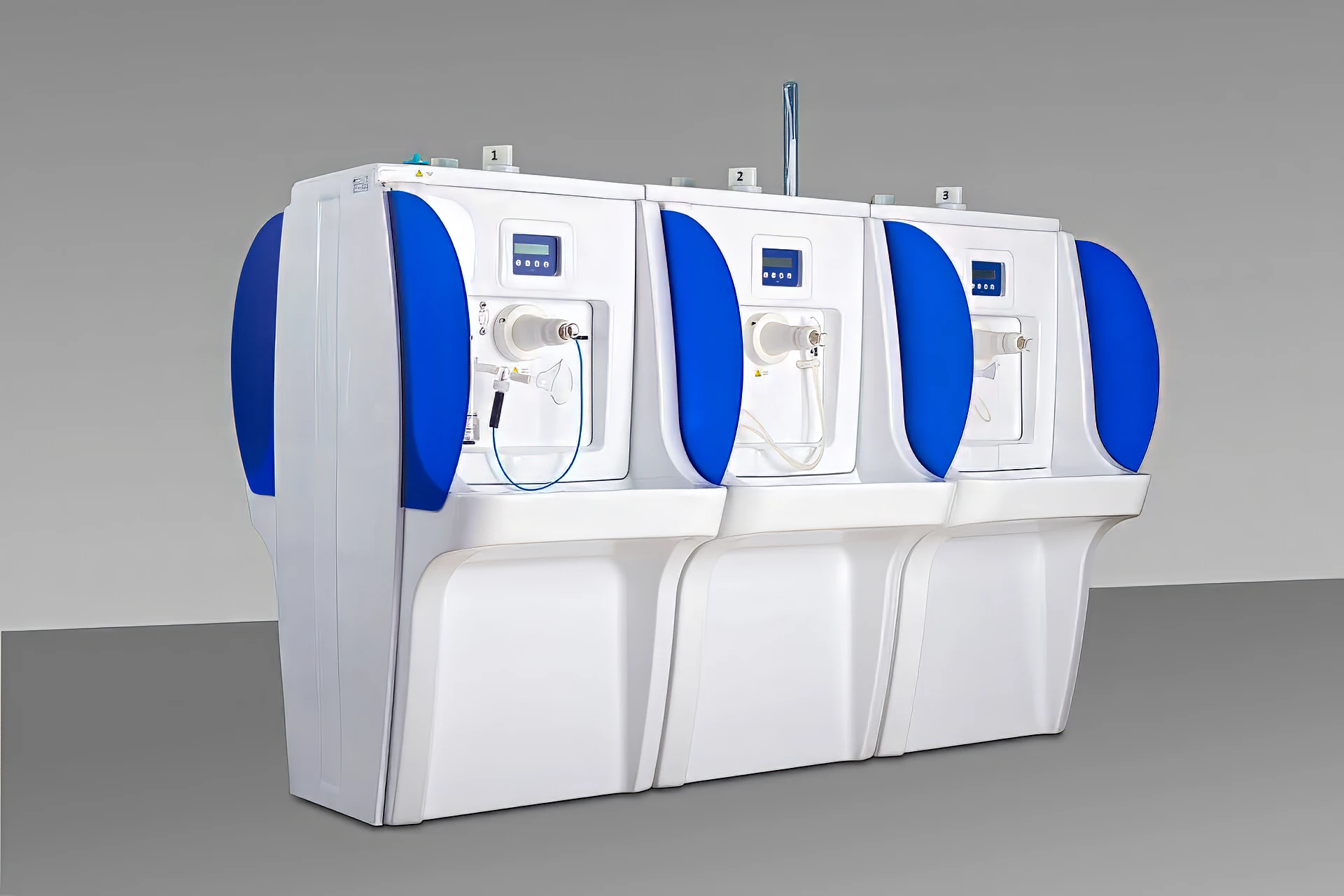
Medical device intended for individual thermal treatments using the established and traditional inhalation and irrigation methods defined by UNI 10865:2000 standard “Thermal treatments. Service requirements”

The IMT19 consists of modular treatment stations and contains the shut-off, control and regulation components for the water and pneumatic carriers used to deliver the therapies.

The system is modular and customizable

Customization options include:

  • Type of therapy.
  • Combination of two or three different therapies at each individual treatment station.
  • Programmable therapy duration with 5 different time settings.
  • Modular system configuration with treatment stations on one or both sides.
  • Number of stations making up the complete system.
  • Therapy management system (manual or automatic).
  • Number of thermal waters.

The device can be connected to a PC via a serial line and the CICO_INALA software can be installed to enable remote automated management of the inhalation department.

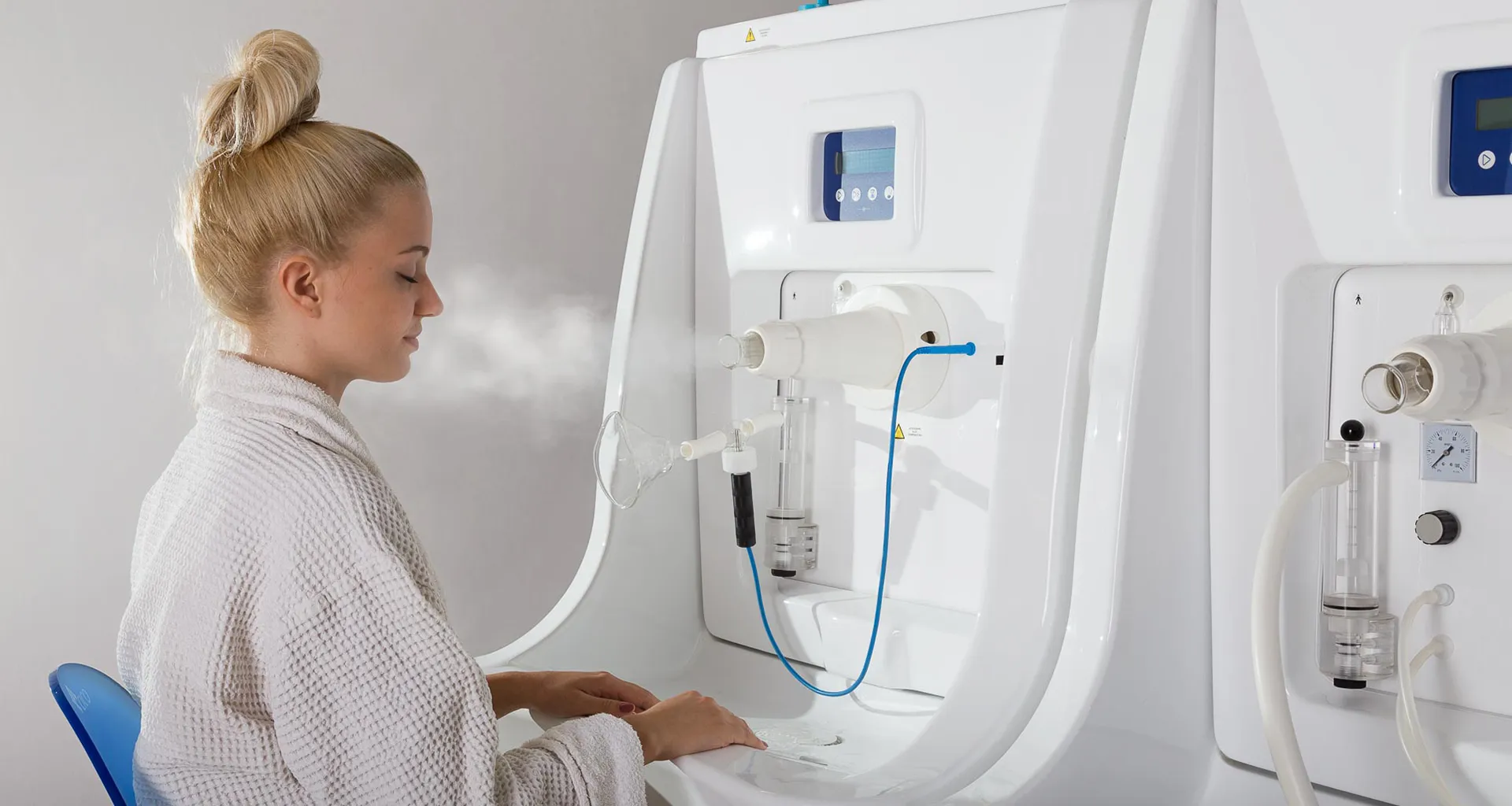
impianto inalatorio una ragazza è seduta alla postazione

With this management system, the software allows:

  • Booking the first available treatment station for the required therapy and duration through an algorithm that evaluates the operating time of each station, so that equipment operation is distributed evenly.
  • Displaying the status of available, reserved and occupied treatment stations on the monitor.
  • A light signal at the treatment station confirming the booking, which switches off automatically when treatment begins.
  • Processing statistics on treatment station use and workflow.

Main features

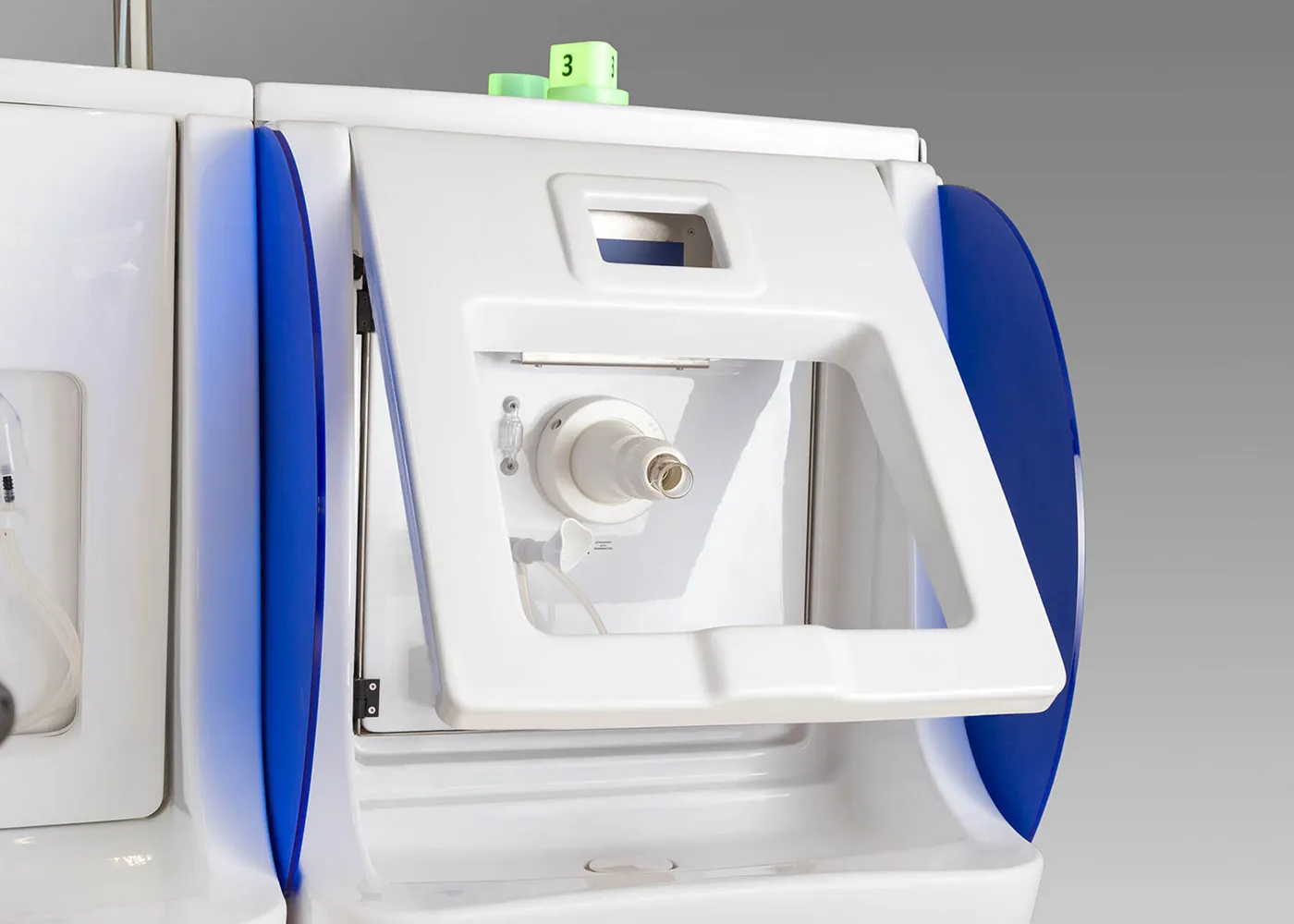
The supporting structure is made of 304 stainless steel, while the covers are made of heat- and corrosion-resistant thermoformed plastic (PMMA+ABS), with an integrated washbasin and dividers between treatment stations to ensure patient privacy. The doors of each station are hinged to the frame, open from right to left, and the dividers are removable. This allows inspections, maintenance and cleaning to be carried out quickly and without obstruction. The modular construction simplifies installation, inspection and maintenance and reduces the costs of plant engineering and the associated building work. Each treatment station has a washbasin that collects thermal-water drips produced during therapy delivery. The washbasin is rinsed through three nozzles using mains drinking water (PP piping) and is managed automatically by solenoid valves (one for each treatment station), at preset intervals during and at the end of treatment, or can be activated manually by the patient using the dispensing button.

The thermal-water piping is made of PVDF, can be fully sanitized with steam and is suitable for food contact. The polycarbonate balancing vessel has automatic filling and draining controlled by a non-immersed capacitive sensor, with automatic reset. The vessel can be inspected for cleaning and houses a temperature probe on its cover. Venturi-system branches are provided for each type of treatment. Thermal water is continuously recirculated to maintain the required temperature and prevent stagnation. (For systems supplied with different thermal waters, one of the piping circuits described above is provided for each type of water).

The steam piping is made of insulated AISI 316 stainless steel and is equipped with a supply filter and a condensate trap on the return line. A solenoid valve is provided for sanitizing and washing the piping, together with solenoid valves serving each CU treatment station. All solenoid valves have shut-off taps to avoid having to stop the entire system during maintenance.

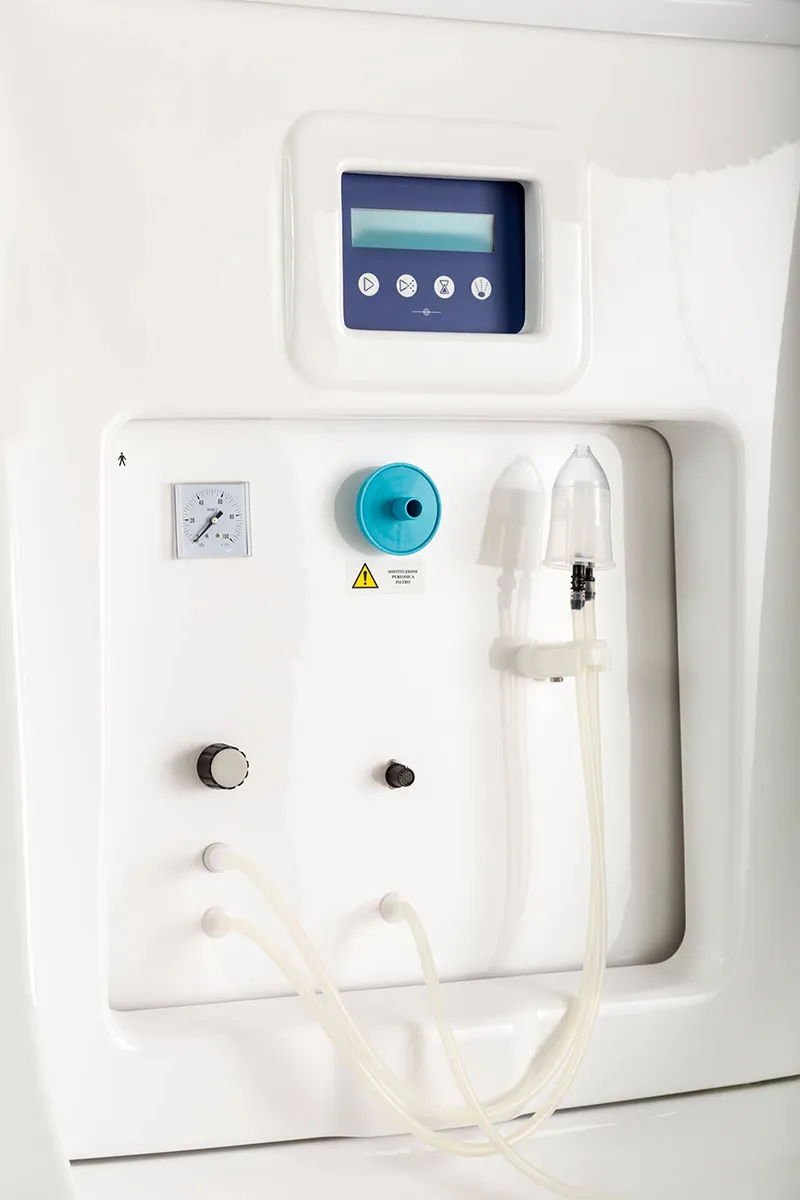
The compressed-air line is made of RILSAN piping with a pressure reducer, pressure gauge and solenoid valves serving each therapy that uses compressed air at the treatment station.
The drain piping is made of self-extinguishing PP and carries both wash water and the thermal water used for treatments.
The device is controlled by an electronic board known as the master board, located at the head of the module. It controls device start-up and shutdown, the sanitization cycle, and filling and emptying of the internal piping. The master board communicates through a data line with the electronic boards of the individual treatment stations. These boards control the actuators and therefore the delivery of treatments.

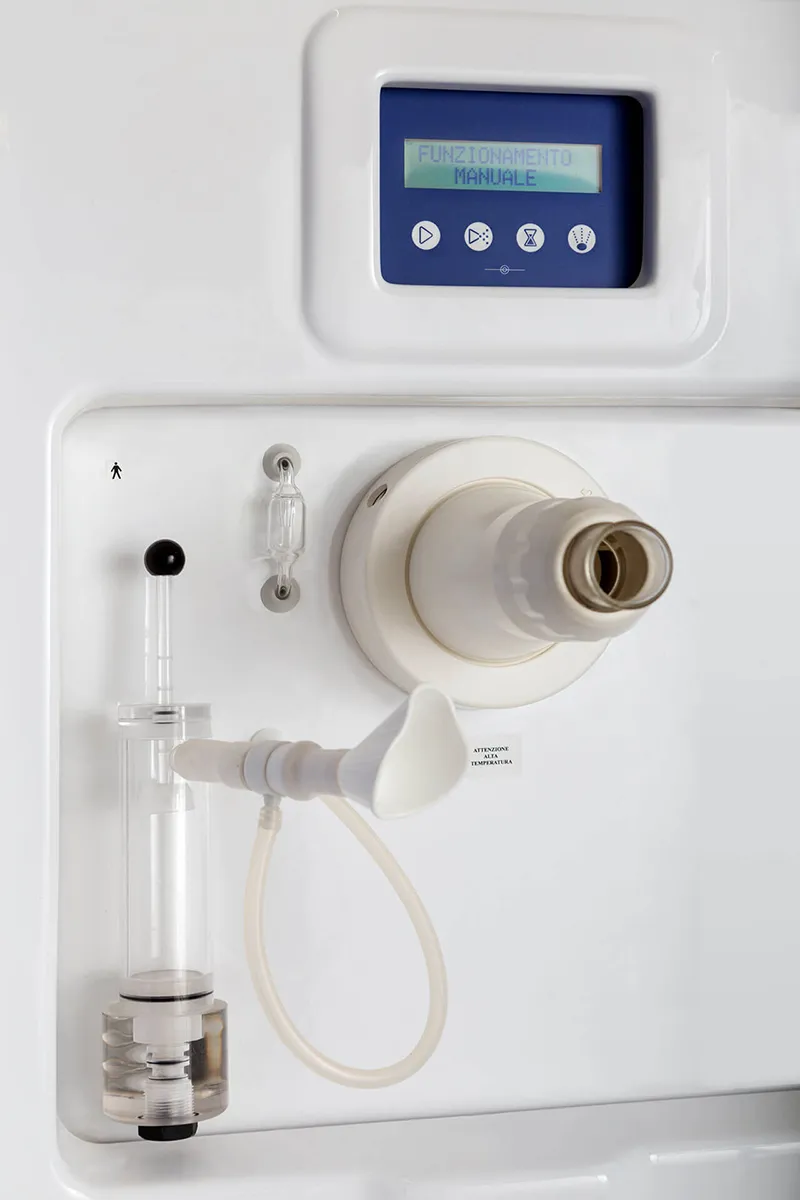
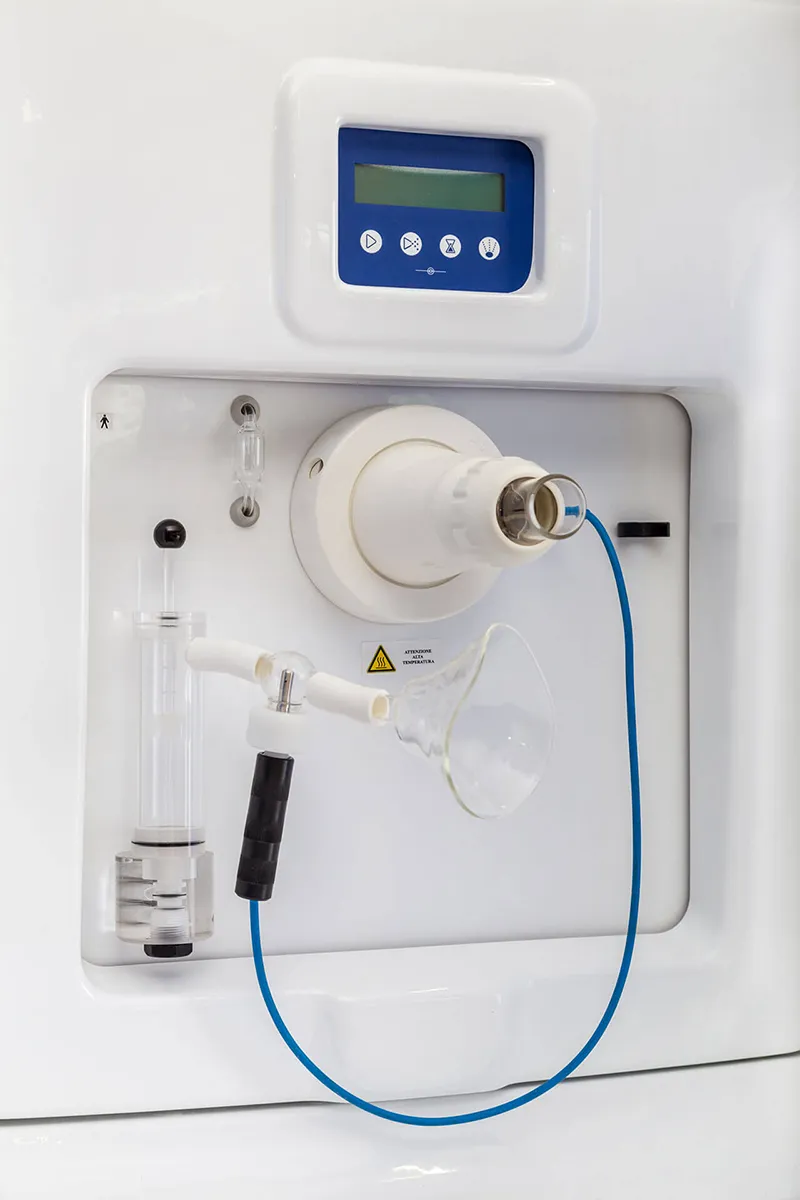
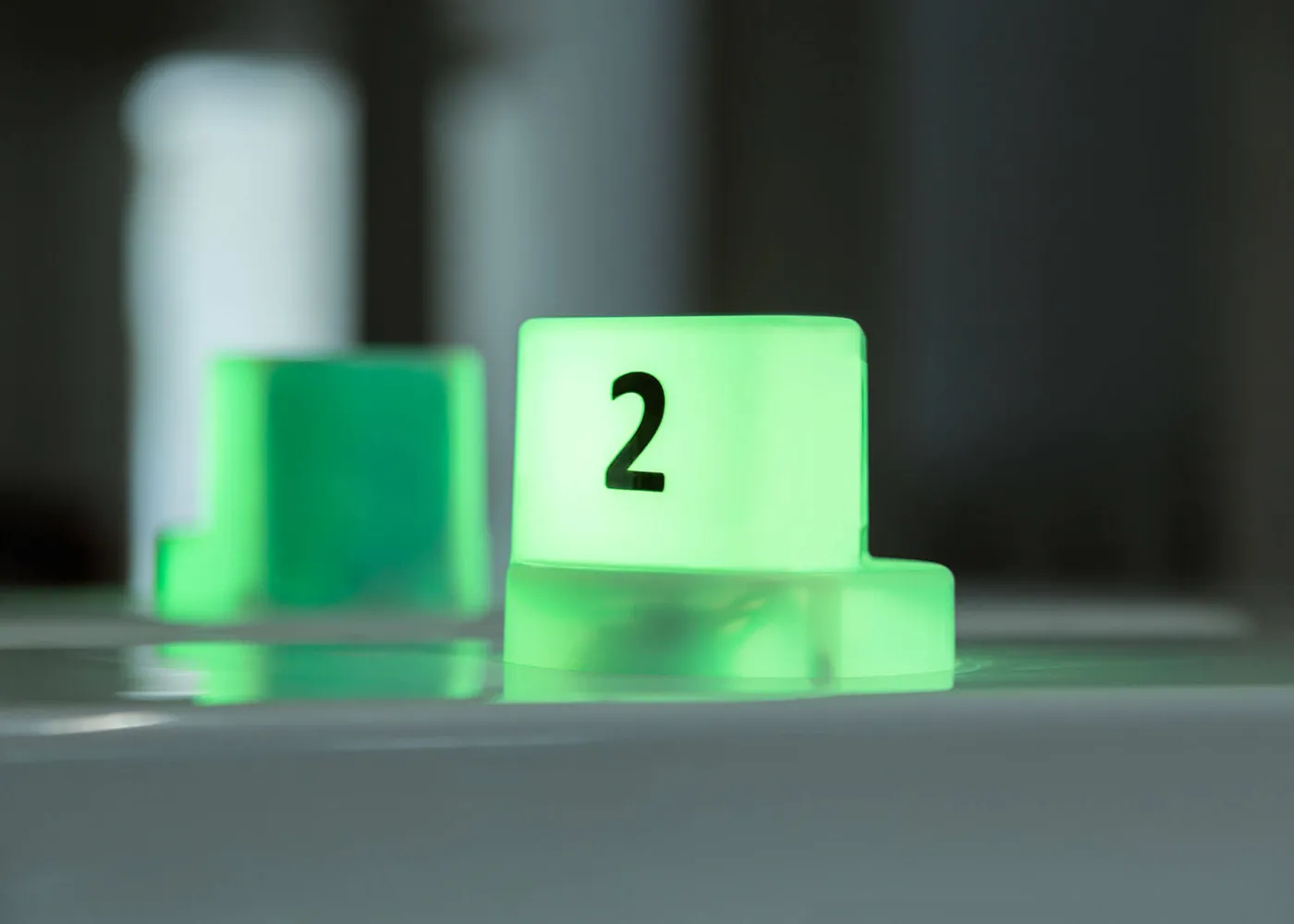
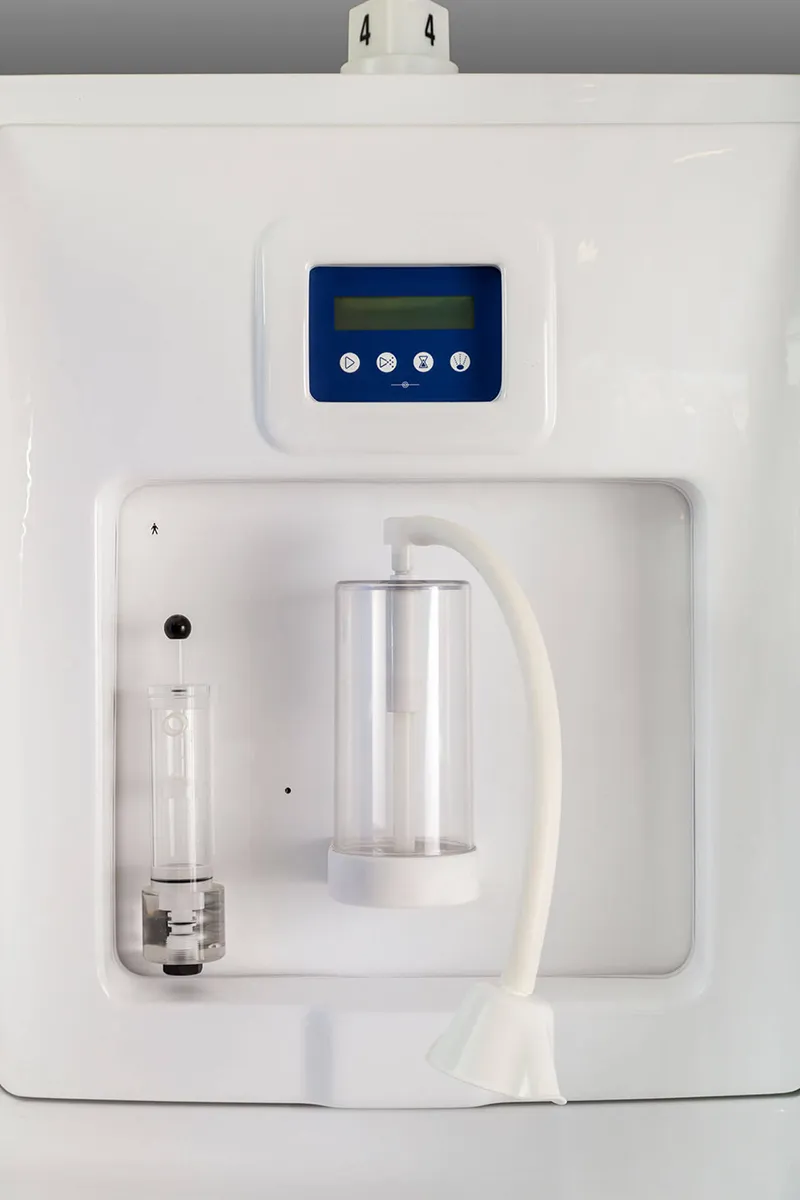
The treatment-station control panel consists of a microprocessor board with an alphanumeric display (16 characters on 2 lines, visible area 99×24), a four-key membrane keypad and a magnetic control for manually enabling the type and duration of treatment. The display shows the operating status of the station and, during therapy, the remaining time. Each station is connected to an LED board housed in a numbered indicator, which changes color according to the station status: available, reserved, occupied, washing or sanitizing.

Aerosol termale

Thermal aerosol (AT)

Thermal aerosol is an inhalation technique whose main components are flowing thermal water and compressed air. The water is broken up in a nebulization chamber (ampoule) by a jet of compressed air at a pressure of 1.5 bar, generating a colloidal suspension with particle sizes ranging from 2 µm to 10 µm.
Particles larger than 3-5 µm are deposited in the upper airways, while smaller particles reach the lower respiratory tract.
Each AT treatment station consumes 13 l/min of compressed air at 1.5 bar and 1 liter of thermal water per 10-minute treatment.
The station includes a thermal-water nebulizer made of material suitable for steam sanitization, a mist-humidity regulator, a removable non-toxic air-water nozzle and a silicone tube connecting the nebulizer to the mask.
Inalazione caldo umida

Warm humid inhalation (CU)

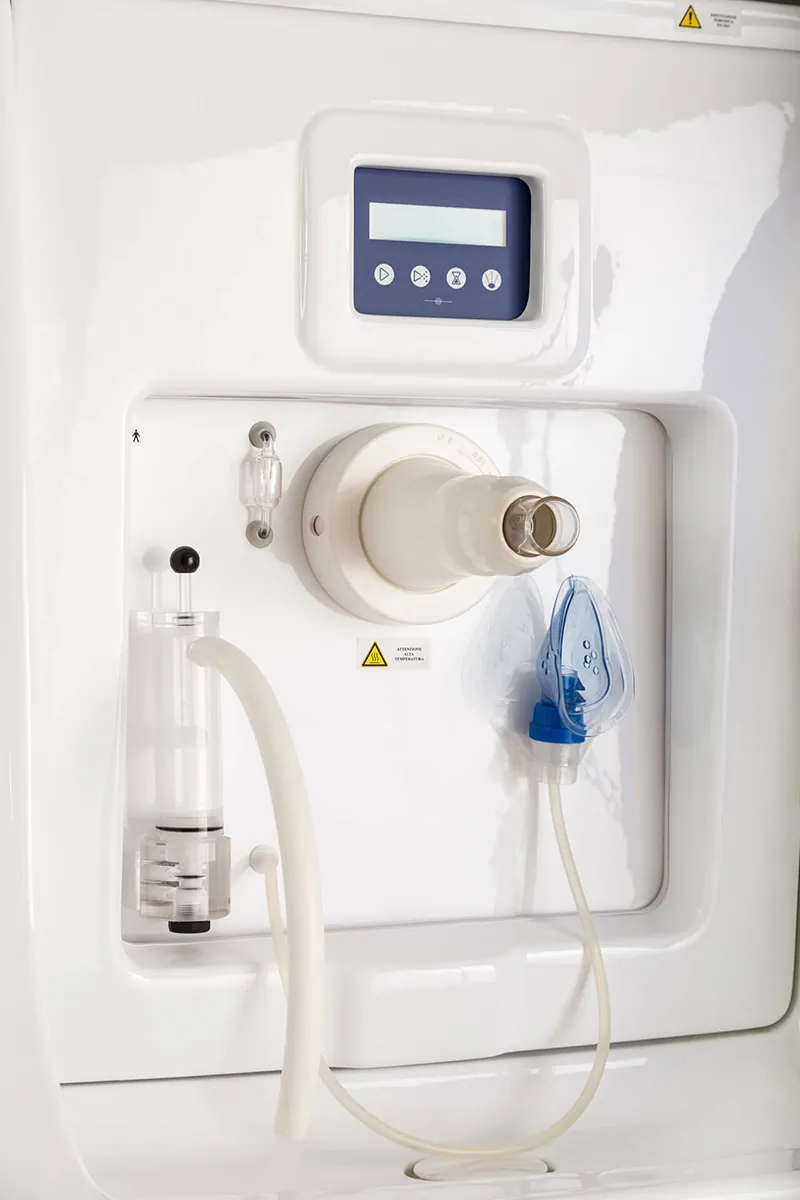
Warm humid inhalation is an inhalation technique whose main components are flowing thermal water and saturated steam. The steam-water mixture is directed toward the patient, who sits with their mouth open in front of the device at a set distance (recommended distance: 25 to 30 cm). Due to its particle size (10 µm to 100 µm), the warm mist (between 35°C and 50°C) reaches the upper airways, trachea and large bronchi.
Each CU treatment station consumes approximately 1 kg/hour of steam at 1.7 bar and 1 liter of thermal water per 10-minute treatment.
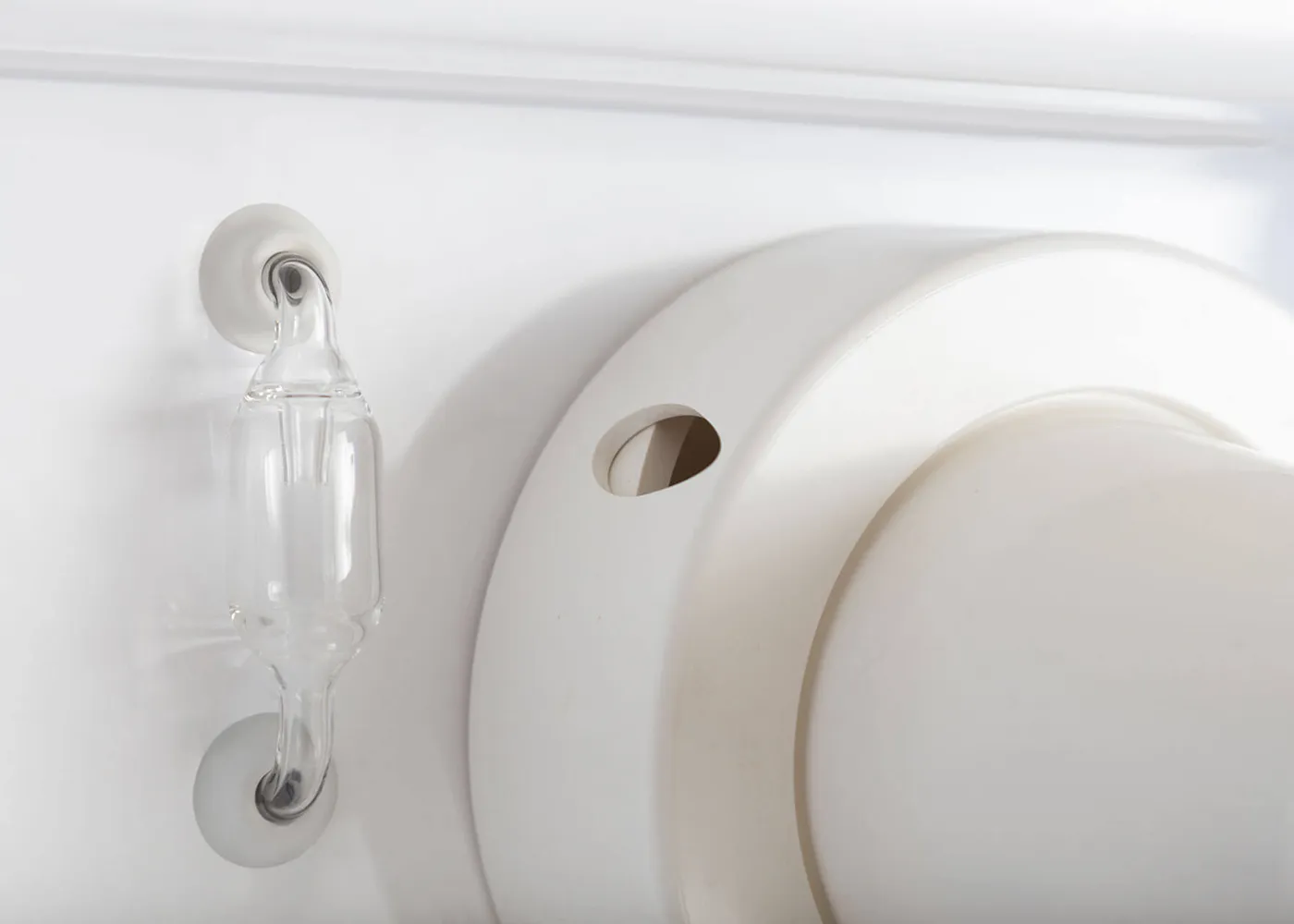
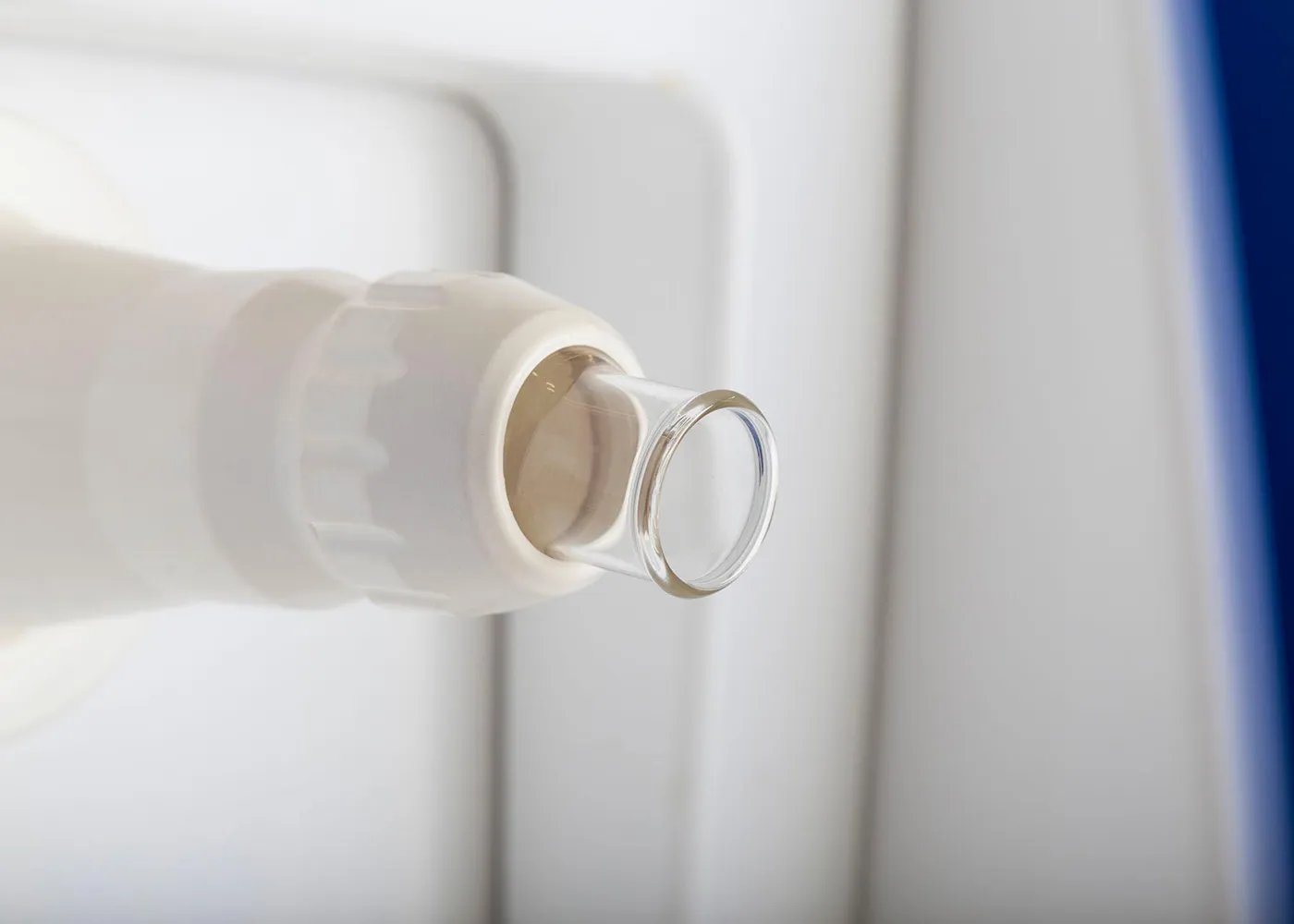
The station includes a non-toxic plastic steam conveyor with an adjustable glass terminal and an internal condensate recovery and drain channel, a support with a mist adjustment ring (wet or dry), a steel nozzle and a Venturi-effect cap made of non-toxic, steam-resistant material.

Aerosol termale sonico

Sonic thermal aerosol (ATS)

This inhalation technique is used to increase aerosol penetration into the airways, particularly the upper airways. A vibrator is added to the standard device to make the particles oscillate at a frequency of approximately 100 Hz.
Thermal-water and compressed-air consumption and the equipment supplied are the same as for the AT station, with the addition of a macro-vibration generator.

Aerosol termale ionico

Ionic thermal aerosol (ATI)

The particles produced in the aerosol receive a negative electrical charge from a generator positioned at the outlet. In addition to helping convey the particles, this charge is also used for therapeutic purposes. This technique enables greater particle penetration. Thermal-water and compressed-air consumption and the equipment supplied are the same as for the AT station, with the addition of a negative-ion generator and a negative-ion emission device with a dedicated handpiece.

Irrigazione nasale

Nasal irrigation (IN)

Nasal irrigation is a treatment technique that washes the nasal cavities using a nasal olive through which thermal water flows by gravity.
Its combined mechanical and therapeutic effect is used when thorough cleansing and washing of the nasal cavities is required.
Each IN treatment station consumes between 1 and 6 liters of thermal water per 10-minute treatment, with a maximum delivery pressure of 10 kPa.
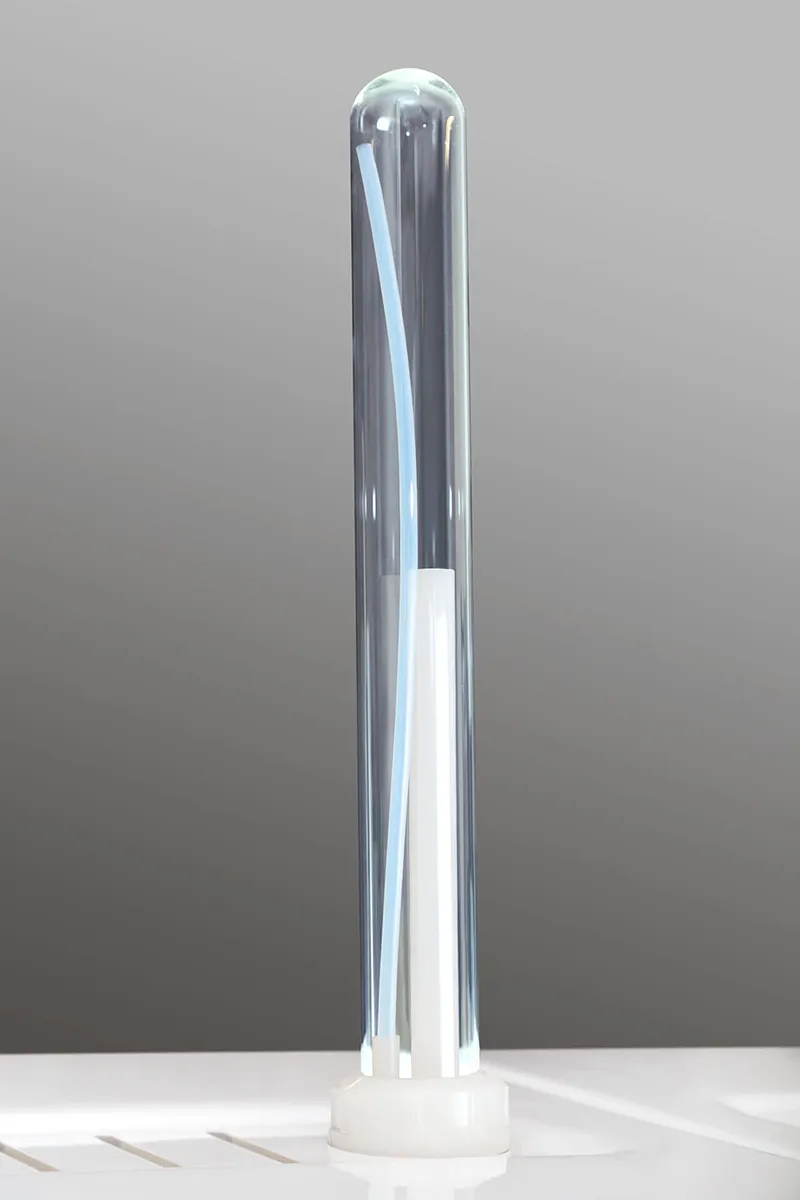
The station includes a glass thermal-water container suitable for sanitization, a nasal olive and a silicone tube connecting the container to the olive.

Humage

Humage (HU)

Humage is an inhalation technique in which the patient inhales the gaseous content of particular thermal waters. The diffusibility of the gas allows this technique to reach even the most peripheral airways.
Each HU treatment station consumes 18 l/min of compressed air at 1.5 bar and a maximum of 18 liters/hour of thermal water.
The station includes a polycarbonate container suitable for sanitization and equipped with an automatic drain solenoid valve, a bubbler for separating the gas from the thermal water, an adjustable delivery terminal and a silicone tube connecting the container to the mask.

Aerosol medicale

Medical aerosol (AM)

Medical aerosol is an inhalation technique that uses a specific water-soluble medicine administered under medical prescription. The device is connected to the compressed-air system. When started, air flows through an aerosol-therapy nebulizer, which breaks the previously prepared medicine into microparticles.
Each AM treatment station consumes 13 l/min of compressed air at 0.6 bar and 2-3 ml of medicine per 15-minute treatment. The station includes a bagged aerosol kit, delivery terminals and a silicone connecting tube.

Doccia nasale micronizzata

Micronized nasal douche (DM)

This is an inhalation technique whose components are flowing thermal water and compressed air. Inside an ampoule (rhino-jet), positioned alternately at the nostrils (the management program interrupts delivery halfway through the set time to allow the nostril to be changed), they produce large aqueous particles (MMAD > 18 µm), which provide a cleansing and moisturizing effect on the nose and paranasal sinus area. It is a specific therapy for treating upper-airway conditions characterized by catarrhal, muco-purulent and crusted secretions. The device is highly effective for relieving nasal breathing difficulties and treating acute and chronic nasal conditions. It has an optimal effect on mucus dissolution and nasal drainage.

Sanitization and washing

Each system contains an automatic management system for washing and steam-sanitizing the thermal-water piping, from the inlet shut-off valve to the delivery terminal.
Raising the temperature of all parts by forced circulation of low-pressure steam for a set period reduces any bacterial colonies in the thermal water to levels below statutory limits.
The temperature in °C reached inside the thermal-water circuits of each module in the inhalation equipment installation is displayed as a graph on the monitor.

The program stores the data and archives the graph, indicating the date and time when sanitization was performed and the temperature in °C reached by each module.
The program also allows the washing and sanitization cycles to be run separately.
PC programming makes it possible to set customized activation times for the various phases, which are continuously displayed on the service monitor.
The flexibility of the system makes it possible to manage system cleaning and hygiene more effectively according to the customer's needs.

Optional accessories

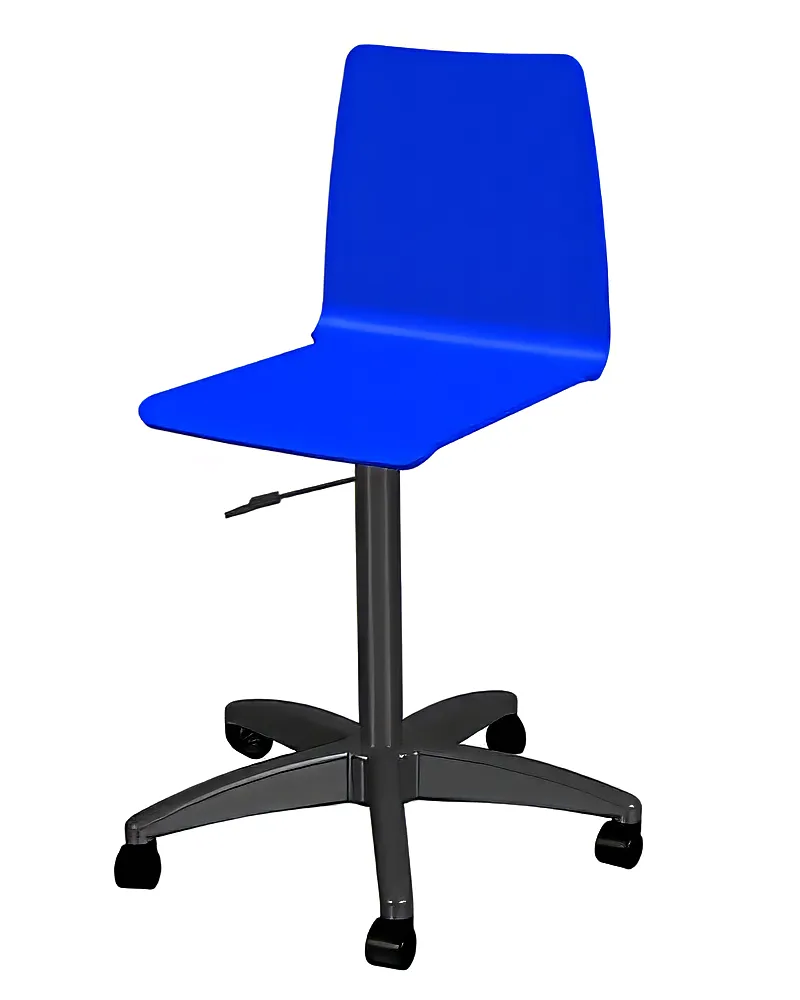
Height-adjustable treatment-station chair with a five-star plastic base and swivel castors. The seat and backrest are made of 8 mm thick cast plexiglass with a blue satin finish.

Technical data

Electrical power supply: 24 Vac ± 10% – 50Hz
Operating mode: Continuous
Nominal power consumption: Depending on the configuration of the installed treatment stations
Electrical protection: Fuses Ø 10×38 type Gg XXA and Ø 5×20 TXXA, where XX is the value to be assigned based on the configuration
Safety class: I tipo B
Weight: From 25 kg to 35 kg per treatment station depending on configuration
Sound level: <70 dB(A)
Protection rating: IP20